

Working Group
“Extractive Humanities”
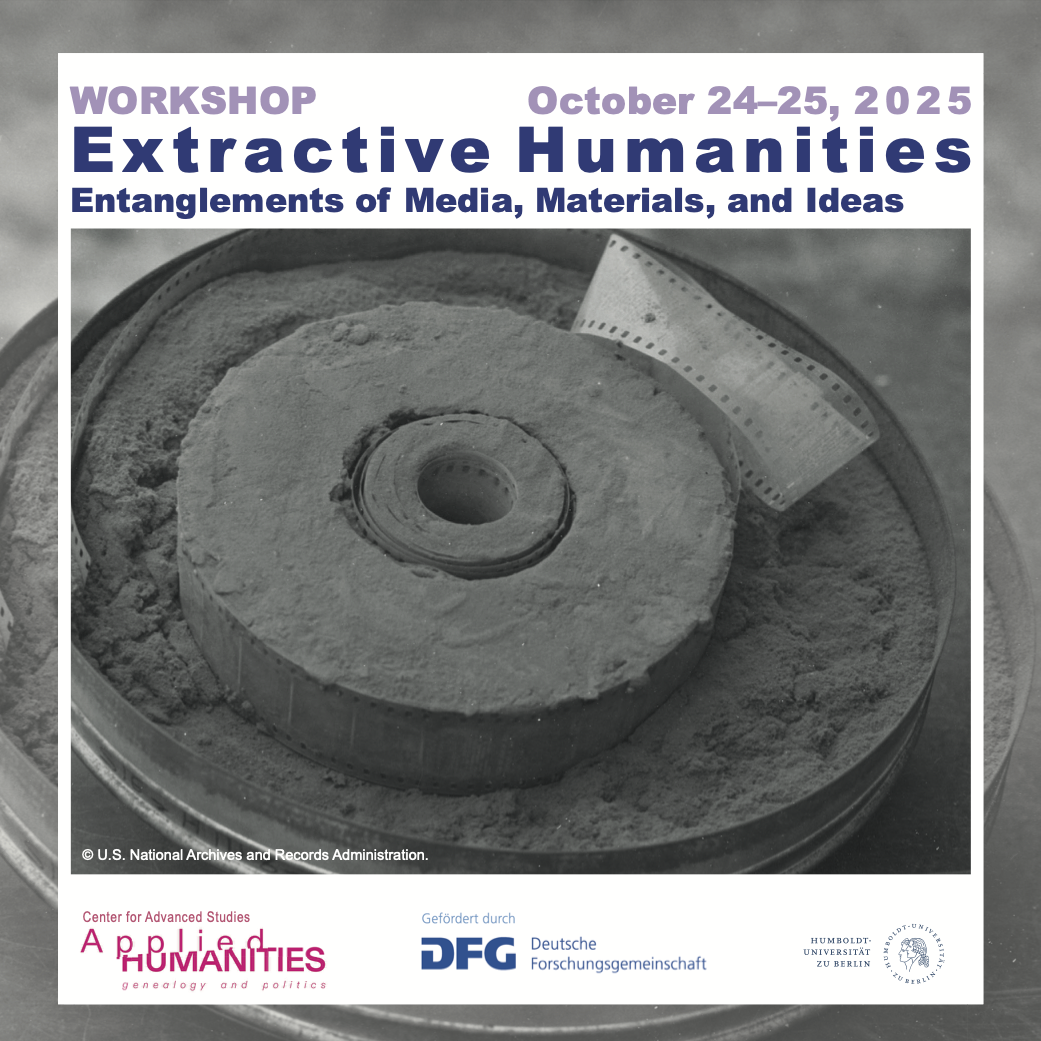
Image: Workshop “Extractive Humanities,” October 24–25, 2025
This working group explores the history of the humanities through a global and material lens, examining the complex interplay between intellectual practices and the material resources that underpin them. By tracing the entanglement of ideas, media, and materials, we aim to uncover the broader ecopolitical and cultural dynamics that shape the humanities over time.
The institutionalization of the humanities in the nineteenth and early twentieth centuries—marked by the emergence of new theories, methodologies, and academic structures—coincided with the rise of media such as photography, film, mass-produced paper, and large-scale technological infrastructures. These tools of knowledge production relied on globally sourced materials and industrial processes. The working group scrutinizes how humanities scholars have historically engaged with material resources, not just as tools, but as integral components of knowledge production within broader intellectual and cosmological frameworks. How have these material entanglements shaped scholarly practices in both Western and non-Western contexts? What distinctive forms of materials knowledge have emerged in different regions?
The working group tackles these questions through two interrelated strands:
1. The Ecopolitical Footprint of the Humanities
This theme investigates the material underpinnings of humanities scholarship by tracing the origins and global supply chains of critical resources. Where did these so-called raw materials or natural resources come from, and through what networks were they distributed? How were seemingly smooth “flows of goods” implicated in systems of colonialism, exploitation, and ethical harm? Conversely, how did non-Western actors contribute to or challenge these processes? By addressing the “colonial debt” of the humanities, this theme examines both materials consumption and the forms of counter-agency forged through transnational or indigenous practices.
2. Materials Knowledge and Interdisciplinary Exchange
This theme delves into the ways in which humanities scholars historically engaged with and disseminated knowledge about the media and materials they used for their work. To what extent were they aware of the environmental and ethical ramifications of their resource consumption? How did interdisciplinary collaboration—particularly with materials scientists and experts from other fields—inform their understanding and practice? We ask how materials knowledge within the humanities shaped both cultural and industrial developments, ultimately contributing to the resource regimes that characterized different historical periods.
-
Workshop “Extractive Humanities: Entanglements of Media, Materials, and Ideas” (PDF)
-
tba
-
For further information, please contact Lotte Schüßler and Viktoria Tkaczyk.