

Former Fellows
Summer 2026
-
Dr. David Bebnowski
March–June 2026
david[at]bebnowski.deI am a historian and social scientist specializing in the intellectual and political history of feminism, the new right, and the new left. Until February 2026 I was a postdoc in an ERC project at the America Institute at LMU Munich. My publications include Die Alternative für Deutschland (2015) and Kämpfe mit Marx (2021).
Conservative Libertarianism
Drawing on self-characterizations of the contemporary German right-wing party AfD as “conservative libertarian,” my project argues that this seemingly recent political tendency has deep historical roots in the interwar period. My thesis is that economic liberals and more traditional conservative political strains were tied together by their shared motivation to thwart popular demands for a democratization of Germany. By investigating political actors across party lines, young conservative clubs, economic lobby organizations, and scientific interest groups in the Weimar period, my goal is to outline a political network that can be described as conservative libertarian.
Photo: Maik Reepschlaeger/ Fotodesign Braunschweig
-
Dr. Alexandra (Sasha) Bergstrom-Katz
Fellow, May–June 2026
sashabkatz[at]gmail.comI am an independent researcher and artist working between the history of science, the medical humanities, and artistic research. I co-organize the working group Performing Science and Medicine and was recently a visiting postdoctoral researcher at Bielefeld Universität and the Max Planck Institute for the History of Science, Berlin.
A Matter of Healing: Clay as an Actant in Psychological Therapy
A Matter of Healing studies clay as a central actor in the development of art therapy theories and techniques. Utilizing archival research, oral history interviews, and hands-on workshops, it examines the many uses of clay as a therapeutic medium in psychotherapy, art therapy, and occupational therapy, whether as a healing agent, communicative tool, diagnostic aid, or medium for occupational practice. The project traces how clay’s material properties have been mobilized to reinforce, but also unsettle, psychological concepts such as development, trauma, and deviancy and how clay and its users generate alternative understandings of the psyche and of healing.
Photo: Sasha Bergstrom-Katz
-
Prof. Dr. Iris Därmann
Prof. Dr. Iris Därmann
April–September 2026
daermann[at]culture.hu-berlin.deI am Professor of Cultural Theory and the Cultural History of Aesthetics at Humboldt-Universität zu Berlin. My work was awarded the Sigmund Freud Prize by the German Academy for Language and Literature in 2022. I co-edit the De Gruyter series Undisziplinierte Bücher on diagnoses of the times and their genealogies.
Child Analysis in the Face of the Shoah
To what extent has Freudian psychoanalysis changed our understanding of childhood? This question takes on a completely different meaning in the context of genocidal destruction of childhood. After the liberation of the concentration camps and ghettos, child analysts in the United Kingdom accompanied surviving children into a life without barbed wire. With the help of psychoanalytic recording, conversation, and drawing techniques, they focused their attention on the experiences of the surviving Jewish children and saw them not only as victims, but also as subjects with their own practices of collective survival and an egalitarian siblinghood that thwarted basic psychoanalytic assumptions.
Photo: private
-
Prof. Dr. Kylie Message-Jones
Fellow, March–June 2026
Kylie.Message-Jones[at]anu.edu.auI am Professor of Public and Interdisciplinary Humanities and director of the Humanities Research Centre at the Australian National University. My books include Museums and Social Activism: Engaged Protest (2014), Collecting Activism, Archiving Occupy Wall Street (2020), and Museums and Racism (2018).
Dissent and Dissonance: Activist Collections in National Museums
Objects in museum collections evidence relationships between humans and the systems we construct to make sense of our world. However, while contemporary museum scholarship has become comfortable with the idea that the meaning ascribed to objects is not static, it less frequently understands systems as being similarly affective and agile. Using a case study drawn from a sample of 2,000 activist objects representing dozens of political causes, which I put in historical and global context, this research compares methods and systems of governance and dissent (and governance in dissenting systems) to explore whether and how participatory democracy can operate as a principle and practice that is shared, perhaps unexpectedly, by some political movements and national cultural institutions alike.
Photo: Amanda Thorson
-
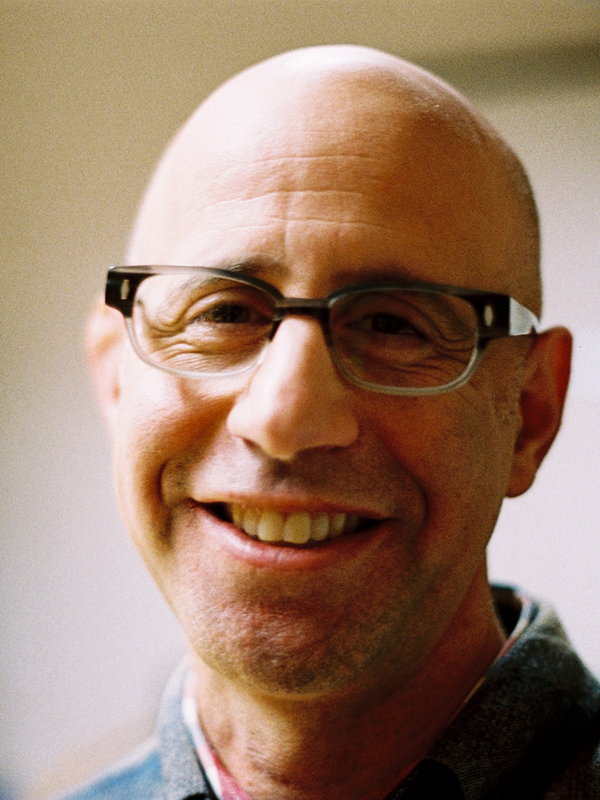
Prof. Dr. Daniel Rosenberg
July–August 2026; April–July 2027
dbr[at]uoregon.eduI am Professor of History at the University of Oregon. An intellectual and cultural historian of modern Europe, my focus is the history of information and information graphics. Among my publications are Histories of the Future (2005) and Cartographies of Time: A History of the Timeline (new ed. 2013).
The Age of the Keyword
There may be no word more characteristic of our information age than “keyword”itself, but the familiarity of the term masks its complexity. Common as it has become, until quite recently, “keyword”was still a term with distinct and specialized disciplinary meanings in information science and cultural theory. But with the rise of the search engine, the senses developed in these different disciplines became bound together. The story of this hybridization provides insight into the process by which computers became mediators of culture while also shedding light on continuities and divergences between models of text analysis within the humanities and without.
Photo: Skúli Sigurdsson
-
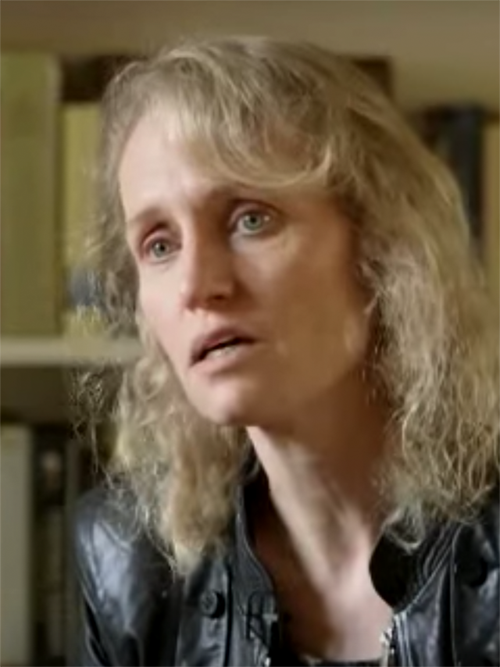
Prof. Dr. Helen Small
May 2026helen.small[at]ell.ox.ac.uk
I am Merton Professor of English Language and Literature at the University of Oxford. My books include The Long Life (2007), a study of the literature and philosophy of ageing; The Value of the Humanities (2013); and The Function of Cynicism at the Present Time (2020).
Changing Humanities
Changing Humanities returns to the terrain of The Value of the Humanities (2013) with the aim of capturing major changes in the underlying cultural and political situation that have a bearing on the work of humanities disciplines. It examines the shift toward short-form “liquid” units of culture, the rapid permeation of the digital sphere by AI, the changing first-language base of the UK and most European countries, the growing environmental crisis, intensifying international conflict, and the spread of war. This new book looks to recast advocacy for the humanities by equipping it to take clearer account of these very significant changes, addressing the challenges presented to perceptions of the humanities’ public value and in some cases their ongoing viability.
Photo: Oxford University Press
Winter 2025/26
-

Dr. Onur Erdur
September–December 2025
onur.erdur[at]hu-berlin.deI am a historian specializing in global intellectual history, the history of knowledge, and contemporary history. I was an assistant professor at HU Berlin from 2017 to 2024 and then held guest professorships in Berlin and Flensburg. My publications include Die epistemologischen Jahre (2018) and Schule des Südens (2024).
What Happened in the Nineties?
Situating the HumanitiesIn contemporary history and popular culture, the long 1990s—beginning 1989 and ending 2001—are widely regarded as a transitional decade marked by globalization, technological transformation, and shifting cultural paradigms. This project asks whether such characterizations (and assumptions) also apply to the humanities and how a history of the humanities in the 1990s could be written. Through a series of case studies, it examines how universities and funding structures adapted to post–Cold War realities and embraced interdisciplinarity; how the rise of “identity politics” reframed scholarly discourse; and how emerging digital infrastructures reshaped the intellectual self-conception of the disciplines.
Photo: Christoph Bombart
-

Prof. em. Dr. Michael Hagner
October 2025–March 2026
mhagner[at]ethz.chI was Professor of Science Studies at ETH Zürich until my retirement in January 2025. My interests include the history of the human sciences, the history of visualization in the sciences, and the history of books. My most recent publication is Seeing Foucault’s Pendulum: Between Science, Politics, and Art (Zone Books, 2025).
The Politics of Anti-Psychiatry, Its Media and Narratives
Without the “paperback revolution” in 1960s print culture and the wide availability of affordable books, there would have been no public rise of the 1968 generation. The same is true of anti-psychiatry. The public strategies of anti-psychiatry in the 1960s and 1970s were marked by close alliances between its proponents and literature, art, photography, film, and various humanities disciplines, which cannot be understood without examining the media that facilitated them. The literary texts of psychiatric patients, first-person accounts of experiences with psychiatric treatment, activist photobooks, and programmatic monographs were key to the political, aesthetic, and epistemic impact of the anti-psychiatry movement.
Photo: Michel Büchel/ ETH Zürich
-

Dr. Karsten Lichau
October 2025–March 2026
karsten.lichau[at]hu-berlin.deAs a historical anthropologist, I have worked extensively on body history, particularly on the histories of sounds and silences, of emotions, and of the “political body.” In my project for the CAS Applied Humanities, I explore how early-twentieth-century theologians explored the new technical possibilities of the radio sermon.
Tuning in to the World: Applied Theology in Early Radio Sermons
How, if at all, can the Word of God—the object of theological reflection—be turned towards the world? Throughout its long history, this question of applicability has taken center stage in theological thinking, especially within the theological subdiscipline of homiletics. My project asks how theologians of different theological orientations engaged with it when exploring the new technical possibilities of the radio sermon. What theological issues and practical challenges were posed by that medium? And to what extent did preachers turning away from the traditional “pulpit tone” actively contribute to reshaping speech styles for radio?
Photo: Anja Berkes
-
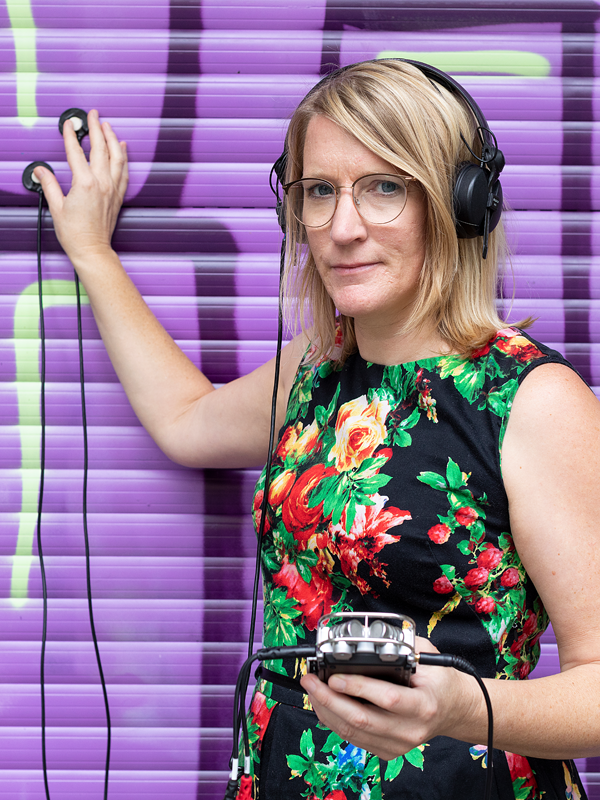
Julia Tieke
September 2025–January 2026
julia.tieke[at]posteo.deTrained in cultural and Islamic studies, I am a freelance producer of radio arts, drama, and features. My articles, audio pieces, and workshops often deal with listening practices, the migration of sounds, and acoustic urban explorations. Much of my work relates to Arab culture and societies.
Fursa Saida: An Audio Project
The research and audio piece Fursa Saida—meaning both “nice to meet you” and “good opportunity” in Arabic—is inspired by the proposal of French musicologist Mady Humbert-Lavergne at the 1932 Congress of Arabic Music in Cairo to use the ondes Martenot, an early electronic instrument, in Arabic music. I have been working on Humbert-Lavergne’s overlooked idea since 2018; this project adds a focus on Brigitte Schiffer, a German-Jewish composer and musicologist who studied the music of the Siwa Oasis, Egypt, before fleeing Nazi Germany in 1935. I combine work on the history of musicology and musical speculation in collaboration with the Egyptian multi-instrumentalist Nancy Mounir and the French ondist Julie Normal—imagining an alternative to the Cairo congress’s aim of standardizing Arabic music.
Photo: Gisela Gürtler
Summer 2025
-
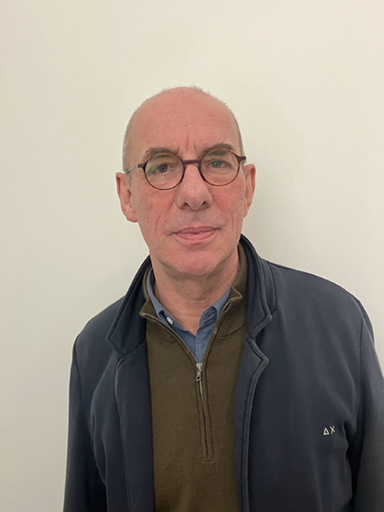
Martin Bauer
Fellow, March–September 2025
martin.t.bauer[at]t-online.deAfter studying philosophy, comparative literature, and religious studies, I spent most of my professional life as a nonfiction editor in different publishing houses. Most recently, I was the editor of Mittelweg 36, the bimonthly magazine of the Hamburg Institute for Social Research, and Soziopolis, a website covering social sciences.
On Prophecy: Perceiving the Present
Different Eastern and Western cultures have developed different modes of prophecy, as powerful means to forecast future events. At the same time, these prophetic, often apocalyptic speech acts are political interventions. The impressive variety of prophetic discourses offers a useful paradigm for the practice of social criticism. Following this genealogical observation, Michel Foucault remarked in the mid-1960s that post-Nietzschean philosophy is commited to the diagnostic ambition of “predicting the present.” My project will uncover possible readings of Foucault’s point: What are the historical, sociological, and epistemological implications of prophecy as a literary genre devoted to coming to terms with a present era?
Photo: Herbert Stattler
-

Dr. Ina Heumann
Praxis Fellow, April–July 2025
ina.heumann[at]mfn.berlinI am a historian of science and co-lead the Center for the Humanities of Nature at the Museum für Naturkunde Berlin. I study the politics of natural history and am particularly interested in issues of natural history and empire, economies of collections, and the social and political responsibilities of natural history museums.
Theaters of War: Natural History Provenances and Institutional Responsibility
European and non-European wars are reflected in natural history collections in many ways. Parts of the collections originate from theaters of war and can be traced back to military actors, as is eloquently testified by insects from the First World War trenches, mammals from colonial “punitive expeditions,” and birds shot by members of the Waffen-SS at Auschwitz, as well as collections destroyed by war. These raise the question of how violent provenances continue to shape museum practices of collecting, preserving, researching, and presenting nature today. My project studies theaters of war in natural history, locating natural history institutions as central sites of military violence, geopolitical interests, and institutional responsibility.
Photo: MfN
-

Dr. Anna Kvíčalová
Fellow, March–June 2025
kvicalova[at]cts.cuni.czI am a historian of nineteenth- and twentieth-century science with a special interest in the history of hearing and acoustics and in the relationship between the humanities and natural sciences. I am a permanent research fellow at the Centre for Theoretical Study, Charles University, Prague.
Transdiciplinarity in Post–Cold War Czechoslovakia
This project examines the institutional establishment of transdisciplinary research in post–Cold War Czechoslovakia, which reflected changing notions of the role of philosophy and the humanities in scientific excellence. I focus on the early history of the “Centre for Theoretical Study,” founded in 1990 as a joint research center of Charles University in Prague and the Institute of Philosophy of the Czech Academy of Sciences. My interest is in the practical execution of the Centre’s concept of transdisciplinarity, which was influenced both by the tradition of informal seminars held in dissidents’ homes in the 1970s and 1980s and by international cooperation with institutes of scientific excellence in the early 1990s.
Photo: Petr Pokorný
-

Prof. Dr. Laetitia Lenel
Fellow, April–August 2025
laetitia.lenel[at]uni-due.deI am Professor of Economic History at the University of Duisburg-Essen. My research brings together the study of economic knowledge practices and economic history. Among other topics, I investigate the history of business forecasting and how societies have grappled with economic turbulence.
Crisis as a Practice of Periodization in History, Economics, and Politics
This project traces the circulation of “crisis” as a practice of periodization in the nineteenth and twentieth centuries. Crisis is usually portrayed as the endpoint of a past detrimental development, a critical juncture that will determine the future. I study the nineteenth-century migration of this periodization practice from the philosophy and theory of history to economics, and ask how early twentieth-century economic research popularized it, propelling it into political discourse. Through two in-depth studies located in 1970s and 2010s Germany and the United States, I examine how politicians used the practice to legitimize their own interventions and delegitimize those of others, and explore the extent to which it not only described crises, but also reinforced them performatively.
Photo: Alexandra Roth
Winter 2024/25
-

Prof. Dr. Anna Echterhölter
Fellow, October 2024–February 2025
anna.echterhoelter[at]univie.ac.atSince 2018 I have been teaching history of science at the University of Vienna. Previously I worked as an interim professor at TU and HU Berlin and held fellowships at the Max Planck Institute for the History of Science, Berlin, and the German Historical Institute in Washington, DC. I am the co-editor of Science in Context.
Pacific Patterns of Justification. Demanding and Translating Rights (1884-1914)
Indigenous legal constitutions existed throughout the German colonial empire. Soon there were questionnaires and journals about legal anthropology. Its findings became a hallmark of liberal colonial policy–especially in Oceania, where colonial officials were often humanities-trained. How did these self-appointed philologists of rules translate the significance of ancestors into the legal categories of an industrialized nation? How did they account for the rights of nature, roles of women, or local schemes of resource management? Indigenous common law was easily instrumentalized by colonial bureaucrats, but also called upon to organize indigenous resistance. My project investigates legitimacy as a crucial social resource and traces the varying patterns of justification across the Pacific colonies.
Photo: private
-

Dr. Emmanuel Ngue Um
Fellow, October 2024–January 2025
emmanuel.ngue-um[at]univ-yaounde1.cmI am Associate Professor of African Languages and Linguistics at the University of Yaoundé 1, Cameroon. A member of the council of the Endangered Languages Project, associate editor of the International Journal of Humanities and Arts Computing, and director of the Institute of African Digital Humanities, I advocate an African perspective in linguistic research and the use of digital technologies for revitalizing under-served African languages.
Rethinking the Perspective of African Linguistics
“Rethinking the Perspective of African Linguistics” critically examines the colonial legacy embedded in the dominant approach to African linguistics, primarily structuralism in its various forms. The project calls for a comprehensive rethinking of the historical, theoretical, and methodological frameworks of the field in order to better reflect the reality of Africa’s linguistic diversity. It argues that the colonial perspective continues to shape how African languages are understood and represented, often reducing their rich diversity to oversimplified models. This dominant view, I contend, prevents an accurate understanding of the social and cognitive value of linguistic diversity, particularly in regulating social interaction and promoting open cognition.
Photo: private
-

Prof. Dr. Christine von Oertzen
Fellow, October 2024–March 2025
oertzenc[at]hu-berlin.deI am a Senior Researcher at the Max Planck Institute for the History of Science (MPIWG) in Berlin and a professor in the Media Studies Department at the Humboldt-Universität zu Berlin. At the MPIWG, I am a member of Department Benson, where I lead the research group “Data, Media, Mind.” At the HU, my teaching focuses on media practices.
Description, Review, Narration: Positioning At-Home Observation of Infants in Fin-de-Siècle Scientific Discourse
My project takes Milicent Shinn, a reknowned figure in the emerging field of at-home study of the early development of infants, as a case in point to explore how training in the humanities, and in particular literary training, was made fruitful in the human sciences. One of the first women to receive a degree at the University of California, Berkeley, in 1878, Shinn started observing her baby niece at home in the early 1890s. I examine Shinn’s method of narrating her niece’s development as an example of participant observation avant la lettre, in which literary forms of close description and critical review figured prominently.
Photo: Arne Sattler
-

Dr. Andreas Rötzer
Praxis Fellow, November 2024–January 2025
Since 2004 I have been a publisher with the independent publishing house Matthes & Seitz Berlin, currently specializing in German literature and humanities and in translations mainly from French, Russian, and Chinese. Before working in publishing, I studied philosophy, economics, and cultural sciences at the universities of Passau, Munich, and Paris.
Publication Formats and Sociopolitical Intervention in Times of AI
Society has changed dramatically under the influence of digital media. These changes, initially barely noticeable and negligible, have become immensely manifest over the past five years and reached a tipping point with the popularization of AI. The associated change in reading habits impacts directly and massively on the catalogs and publishing strategies of publishers with a humanities profile. The infrastructure of knowledge has been revolutionized, especially through publicly funded open access platforms, and the altered financial basis of publishers’ business models now affects both what and how they publish. What new forms of communicating academic knowledge are possible? What is the future of academic publishing, and how will it affect the production of academic knowledge?
Photo: private